

Chicago, September 17, 2026, 11:30 a.m. Central. Prices are Wednesday closes unless stated otherwise. This piece resolves and extends [Five Percent: The Near-Term Price of the Long Arc (https://christophersweat.substack.com/p/five-percent-the-near-term-price), published Wednesday morning before the Federal Reserve’s decision; the four claims, the five registry entries, and the confidence scale are carried over from it.
The question
In [Five Percent](https://christophersweat.substack.com/p/five-percent-the-near-term-price), we tested four of the administration’s long-horizon claims against the prices of September 14 and 15. On Wednesday, the Federal Reserve raised rates for the first time since July 2023. What did the decision, the projections and the market’s answer do to each of those claims, and what do we know now that we did not know Tuesday?
In brief
What happened. Three hours after Five Percent was published, the Federal Open Market Committee raised the target range a quarter point to 3.75–4.00 percent by a 12–0 vote. The projections moved further than the rate: the year-end median rose from 3.8 to 4.1 percent, sixteen of eighteen participants see at least one more increase this year, and the 2027 median rose from 3.6 to 4.1, which removes the cuts June had projected. Warsh, in his opening statement: “We must be confident that underlying inflation is moving to our objective, clearly and at sufficient speed. Today, the FOMC decided that this standard has not been satisfied.” Treasury’s official close: two-year 4.74 percent, up 7 basis points; ten-year 5.01, up 1; thirty-year 5.35, down 1. Brent settled at $105.83 after the energy secretary said the Saudi pipeline outage would be “measured in days,” and was near $102 on Thursday morning. The Dow closed down 631 points, 1.2 percent; the dollar index reached a seven-week high.
Why it matters. Of the four claims, one is now closed by the Fed’s projections rather than by the market: “rates should come down.” The growth claim split: the committee revised 2026 growth up to 2.3 percent and called productivity and capital investment strong, then raised rates anyway, and 2.3 is still short of the 3 percent Bessent set as his condition. The energy claim was untouched by the decision; Brent fell 3 percent on the energy secretary’s “days,” and Warsh said the Fed “cannot affect any individual price.” The midterms claim now has October 28 as a live date: sixteen of eighteen officials project at least one more hike this year, and futures put October at even.
Effects. The two-year rose 7 basis points on the day and the thirty-year fell 1; the ten-year, which mortgages key off, was up 1. Every 25 basis points on short rates adds about $3.5 billion a year in interest across leveraged loans, and the projections show another coming. The curve did what Five Percent said it would: the thirty-year rallied more than the two-year on the statement, and the two-year led higher once Warsh spoke. Stocks joined the repricing for the first time: the Dow fell as much as 850 points during the press conference and closed down 631.
What comes next. The Bank of Japan decides Friday. September jobs on October 2, CPI on October 14, the Fed again on October 28. The registry entry on the curve, FC-26-004, has its first official observation. The president answered on Truth Social and in person: rates “should be 1%, or less,” and, of Warsh, “I talked to Kevin and I said, ‘you might as well vote with the board because it’s not going to matter.’”
The near term arrived on schedule. At 1 p.m. Central on Wednesday, the Federal Reserve did what the market had priced at 93 percent and what five administration officials had spent three weeks asking it not to do, and it did so without a dissenting vote. Besides the decision, it published projections showing one more hike this year and none reversed in 2027; the bond market answered within the hour, and the president answered both by evening.
Findings
Each finding rests on a document or a published series.
First. the FOMC raised the target range to 3.75–4.00 percent on September 16 by a 12–0 vote. The statement says inflation “remains elevated,” that the action “will support a timelier return to the Committee’s 2 percent goal,” and that “the Committee will deliver price stability.” It names “geopolitical developments” as a source of elevated uncertainty and describes economic activity as expanding at a solid pace with strong productivity and robust capital investment. Basis: FOMC statement, federalreserve.gov, September 16.
Second. the Summary of Economic Projections puts the median federal funds rate at 4.1 percent for end-2026, against 3.8 in June; 4.1 for end-2027, against 3.6; 3.9 for 2028; 3.6 for 2029; 3.2 in the longer run. Sixteen of eighteen participants place the end-2026 rate above the new 3.875 midpoint; four place it at 4.375. Median PCE inflation for 2026 is 3.7 percent, core 3.4; seventeen of eighteen participants judge inflation risks weighted to the upside. Median 2026 growth is 2.3 percent, unemployment 4.1. Basis: SEP, federalreserve.gov, September 16.
Third. Treasury’s official par yields at the close were 4.74, 5.01 and 5.35 percent, against 4.67, 5.00 and 5.36 on September 15: the two-year up 7 basis points, the ten-year up 1, the thirty-year down 1. The whole curve had rallied in the half hour after the statement and the front end rose during the press conference. The Dow closed down 631 points; the dollar index rose to a seven-week high; futures moved to roughly even odds on a second hike on October 28. Basis: U.S. Treasury daily par yield table; CNBC, Yahoo Finance and CNN live coverage; Saxo.
Fourth. August retail sales rose 1.2 percent against an expected 0.9 and a July decline of 0.5. Basis: Census Bureau, September 16, as reported.
Fifth. At the press conference, Warsh said the standard he set at Jackson Hole “has not been satisfied,” that “inflation is too high, and has been for too long,” that “our predominant focus is on the price stability side of our mandate,” and, asked about the president, “I’ve got nothing for you on the discussion with the president.” Basis: Federal Reserve press conference, September 16, as reported by CNBC and Yahoo Finance; quotations to be reconciled against the Fed’s transcript when posted.
Sixth. Hours after the vote, the president wrote on Truth Social that “Interest Rates in the United States should be 1%, or less, because we are the Best Credit in the World — BY FAR,” tied the deficit to borrowing costs, and closed: “LOWER THE INTEREST RATES FOR THE UNITED STATES OF AMERICA, AND FAST!” Arriving in Charlotte for a campaign rally on Wednesday evening, he told reporters, “I talked to Kevin, and I said, ‘you might as well vote with the board because it’s not going to matter,’” and said he retained confidence in Warsh. Senior deputy press secretary Kush Desai called the hike on Fox News “a rather unfortunate decision by the Federal Reserve” that was “not backed by a particularly compelling economic case.” Basis: Truth Social post as reported by Reuters and CNBC, September 16; presidential remarks in Charlotte as reported by Yahoo Finance; Fox News.
Assessment
The “rates should come down” claim is closed by the Fed’s projections, independent of the market’s pricing. Confidence: documented.
The committee raised rates into a strengthening economy: growth revised up, unemployment revised down, retail sales reaccelerating. That supports the private-economy half of Bessent’s growth claim and does nothing for the 3 percent condition, since the committee’s 2026 growth median is 2.3. Confidence: documented in the projections; inferred from the reading.
The curve flattened 8 basis points on the day of the first hike, with the front end up and the long end down, which is a market pricing restored credibility rather than added fiscal risk. Confidence: documented on the close; inferred on the reading.
The market went in more hawkish than the committee, four hikes priced against two in the dots, and came out closer to it, with October at even. Confidence: documented in the pricing; inferred from the reading.
The dollar rose on the decision, about 0.65 percent in the hour after the vote and to a seven-week high by the close, on the unanimity as much as the quarter point. Five Percent left the dollar unresolved. Its first test: a unanimous hike strengthened it. Confidence: documented.
What Five Percent got right, and what it missed
Our standard requires us to say what we got wrong as plainly as what we got right.
What held: the curve reading. Five Percent said the move was front-end led and priced the Fed rather than the deficit, and that on the day of the hike the two-year rose 7 basis points while the thirty-year fell. The rates claim closed by the Fed’s projections rather than by the market pricing the piece had to rely on. The piece said the repricing had not yet reached stocks; it reached them within hours. The dollar section, which refused to assert a break the data did not show, was right to refuse: the dollar rose to a seven-week high on the hike.
What it missed. Three things. The piece did not carry August retail sales, which were published the morning it went up and which the Fed’s statement leaned on; the omission did not change the argument, and it should have been there. The piece described the White House’s three weeks as a pressure campaign and missed the hedge inside it: the president’s “do what he has to do” and Hassett’s “we’re going to respect the process” were on the record before the vote, and they matter: the request was made with the outcome disowned in advance. And the piece treated October 28 as a live date for a second hike without giving the other side, now argued by Goldman Sachs Asset Management, that the committee skips the meeting six days before the election and moves in December. FC-26-006 carries both readings.
What was superseded. The 92 percent hike probability the piece cited was 93 by the morning it published and 100 by 1 p.m. The 4.988 percent ten-year figure that appeared in early drafts was replaced by Treasury’s 5.00 before publication; Treasury’s official table is the series the piece runs on.
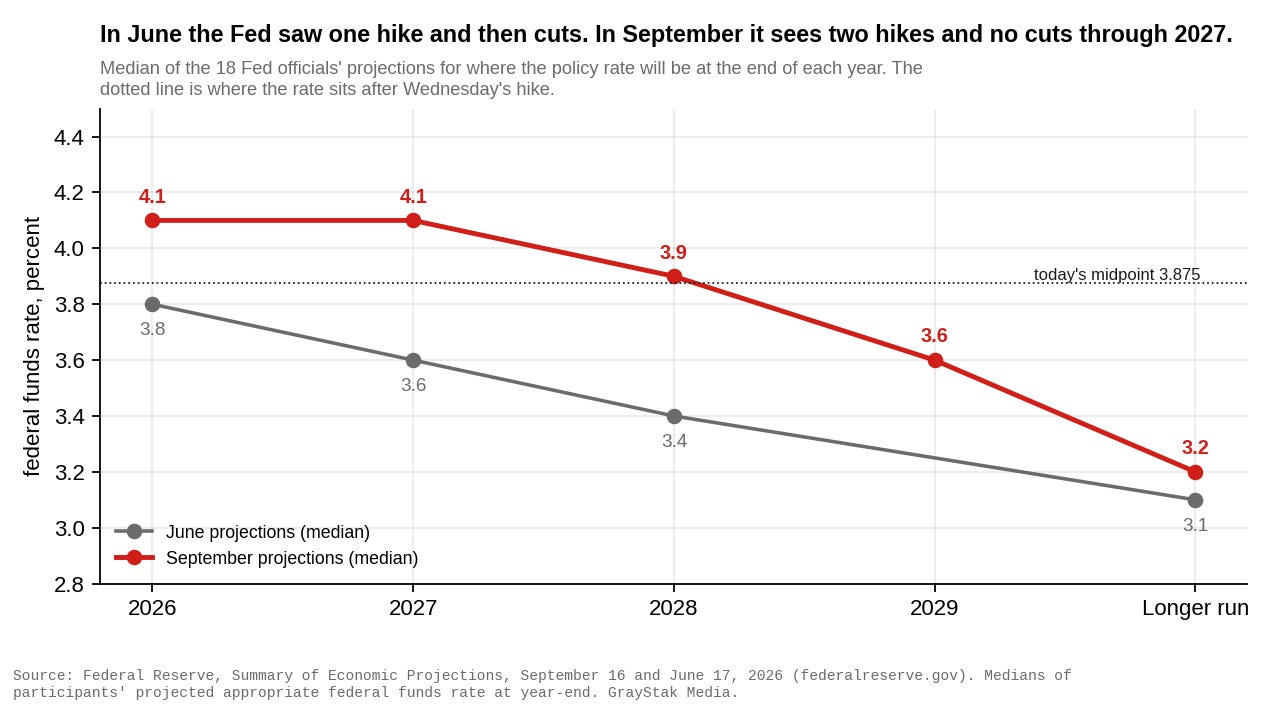
Figure 1. Median projected federal funds rate at year-end, June against September. Source: Federal Reserve SEP.
What the Fed said
The statement runs to four sentences of substance, none of them hedged. Activity is expanding at a solid pace; uncertainty remains elevated “owing, in part, to geopolitical developments”; inflation remains elevated; the action “will support a timelier return to the Committee’s 2 percent goal”; “the Committee will deliver price stability.” In July the same committee held 9–3 with Hammack, Kashkari and Logan dissenting for a hike. In September it voted 12–0 for one. The chair moved to the dissenters, and the statement records no one moving the other way.
In June, the median participant expected one hike in 2026 and cuts in 2027. In September, the median expects two hikes this year, one delivered and one to come, and a hold at 4.1 through 2027. Sixteen of eighteen participants place year-end above the new 3.875 midpoint; four place it two hikes higher. Inflation projections rose again to 3.7 percent for PCE and 3.4 for core, and seventeen of eighteen still judge the risks to the upside. Growth was revised up to 2.3 percent and unemployment down to 4.1.
In July, by AP’s account, he gave little explanation at the press conference, and the long end sold off for seven weeks, a run that ended at 5 percent on Tuesday. This time he applied the test he had set at Jackson Hole and said so.
“We must be confident that underlying inflation is moving to our objective, clearly and at sufficient speed. Today, the FOMC decided that this standard has not been satisfied.” Kevin Warsh, opening statement, September 16
Among the changes he listed since July were the strength of the economy, particularly the labor market, and inflation that stayed elevated through the summer: “All three of those things lend themselves to a firm unanimous decision today.” Nothing he or the committee saw suggested the economy was slowing, he said, and so “we removed a dose of accommodation.” As has been his practice, he appears not to have submitted a projection to the dot plot, by CoinDesk’s reading of the release.
“The plain fact is that inflation is too high, and has been for too long. This summer’s inflation readings do not tell me that underlying trends have meaningfully improved.” Warsh, press conference
Asked about the president: “I’ve got nothing for you on the discussion with the president.” On guidance: “I’m not in the forward guidance business.” On the market’s role:
“Sometimes the market tries to prejudge our outcomes. I’ll observe market prices and see what they have to say. But today was our decision.” Warsh, press conference
He called the decision “a sober decision, serious decision, responsible decision, one that we have been preparing for and thinking about in my 110 or 120 days here.” On oil, he conceded the limit:
“We cannot affect any individual price, whether it be oil prices, whether it be food.” Warsh, press conference
The hike, he said, was about keeping price increases from broadening beyond energy.
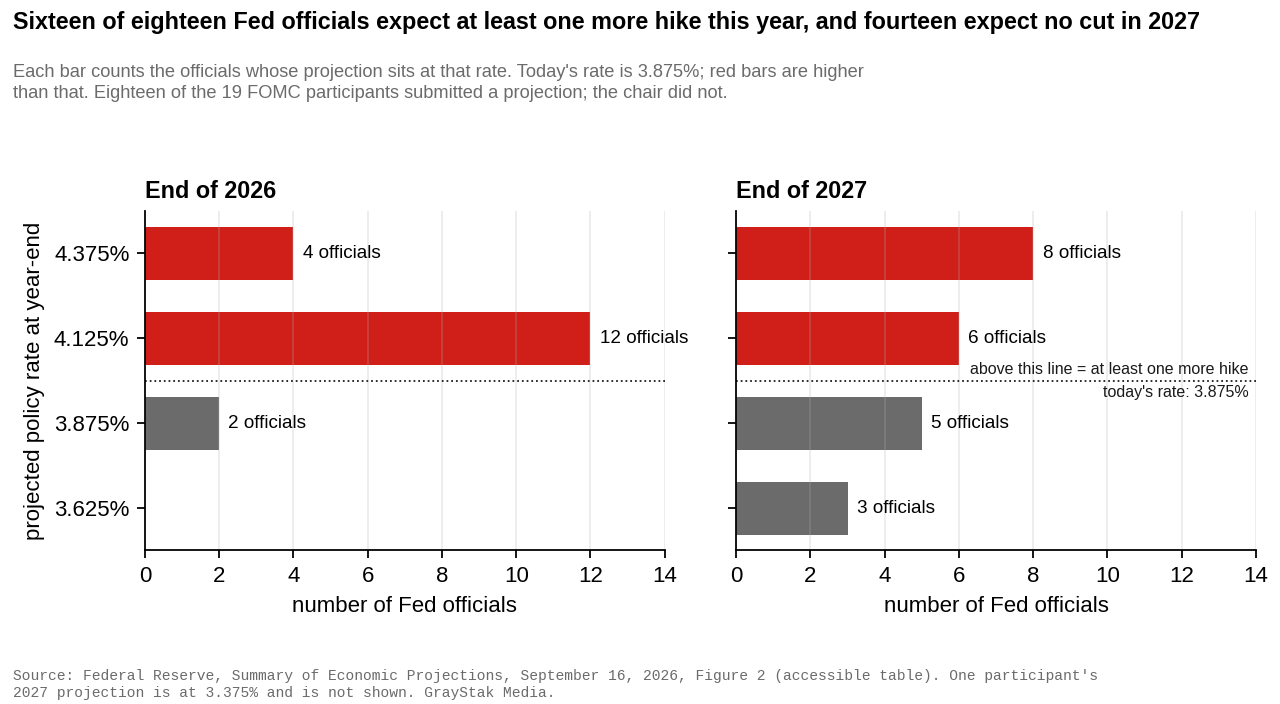
Figure 2. Distribution of participants’ end-2026 and end-2027 projections. Source: Federal Reserve SEP, Figure 2.
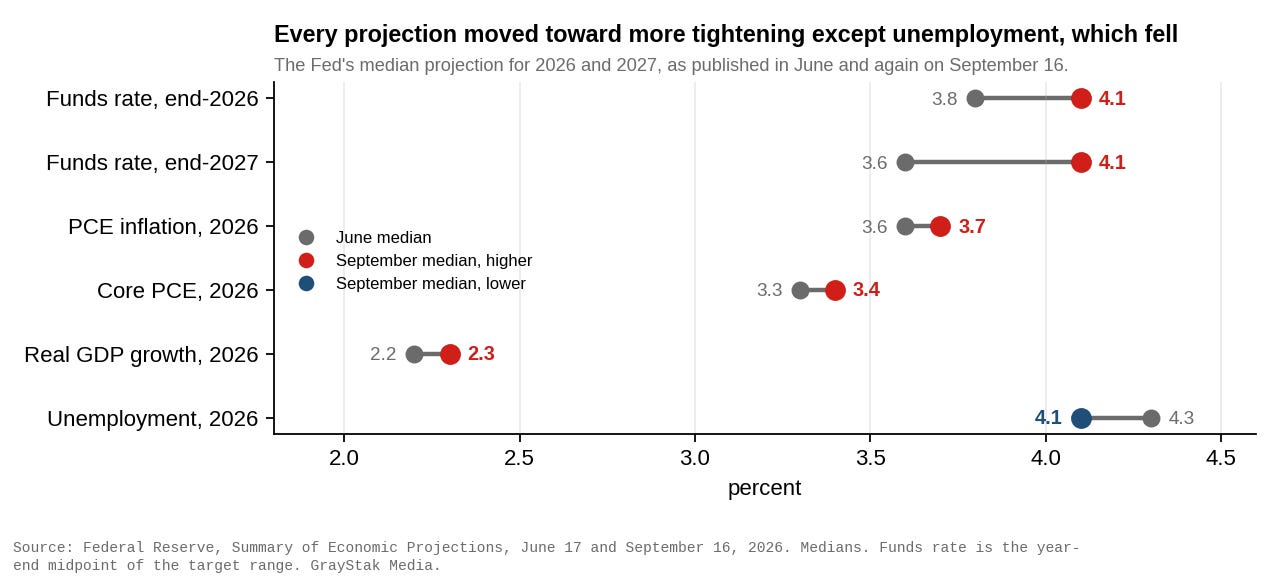
Figure 3. What the committee revised between June and September: medians for the funds rate, inflation, growth and unemployment. Source: Federal Reserve SEP.
In July the same committee held 9–3. In September it voted 12–0 for a hike. The chair moved to the dissenters, and the statement records no one moving the other way.
What the market answered
The market read the statement one way and the press conference another. In the half hour after 1 p.m., the whole curve rallied, the thirty-year most, as it does when investors expect a hike to lower future inflation. Once Warsh spoke, the front end turned: the two-year rose 5 basis points to 4.717 percent while the ten-year held at 5.008. Bank of America had sketched that scenario before the meeting: a chair who signals more hikes pulls the expected path forward, and two-year yields rise. Warsh sounded like Jackson Hole rather than July, and the two-year rose. The registry’s curve entry got a first day in its favor. Stocks, which had risen on the statement, fell on the press conference: the Dow fell as much as 850 points at the low, about 1.6 percent, with the banks leading. Five Percent said the repricing had run through bonds, oil and the pump and had not yet reached stocks. On Wednesday afternoon it did, led by the banks. DoubleLine’s Jeffrey Gundlach on CNBC: “Virtually no chance that this is the peak” of the funds rate. The dollar index rose about 0.65 percent after the vote. Fed funds futures moved to roughly even odds on a second hike on October 28.
Treasury’s official close settled the day. The two-year ended at 4.74, up 7 basis points; the ten-year at 5.01, up 1; the thirty-year at 5.35, down 1. Every maturity from six months to three years rose 5 to 7 basis points and both long bonds fell. The curve flattened 8 basis points between two and thirty years on the day of the first hike. Five Percent described this pattern before the vote: a market pricing the central bank, with the thirty-year falling on a hike it believed.
KPMG’s Diane Swonk stated the mechanism before the meeting: a hike now could lower long-term rates later, because restoring faith in the 2 percent target lets the inflation premium fall, and failing to hike would tighten instead through mortgages, corporate borrowing and interest on the debt. Going in, futures had priced roughly four increases through mid-2027 against the two the dots describe; Goldman Sachs Asset Management now reads the path as December, with October skipped for the election.
The closes: the Dow down 631 points, 1.2 percent, at 51,462, with Goldman Sachs the largest drag; the S&P 500 down 0.45 percent at 7,552; the Nasdaq flat at 25,978. All three had been higher before the statement. Brent settled at $105.83, WTI near $102, both about 3 percent lower after the energy secretary’s remarks. The dollar index closed at a seven-week high.
Overnight, yields fell. Bloomberg’s Thursday morning read was that global bonds recovered on Warsh’s inflation vow, the ten-year ending eight days of gains; Japanese and Australian yields eased with it ahead of the Bank of Japan’s Friday decision, where 89 percent of the economists CNBC surveyed expect a hike to 1.25 percent. By 7 a.m. Central, the two-year was near 4.675, down 5 basis points; the ten-year 4.943, down 6; the thirty-year 5.301, down 4. Brent was near $102, down 2 percent, and Dow futures were up about 600 points.
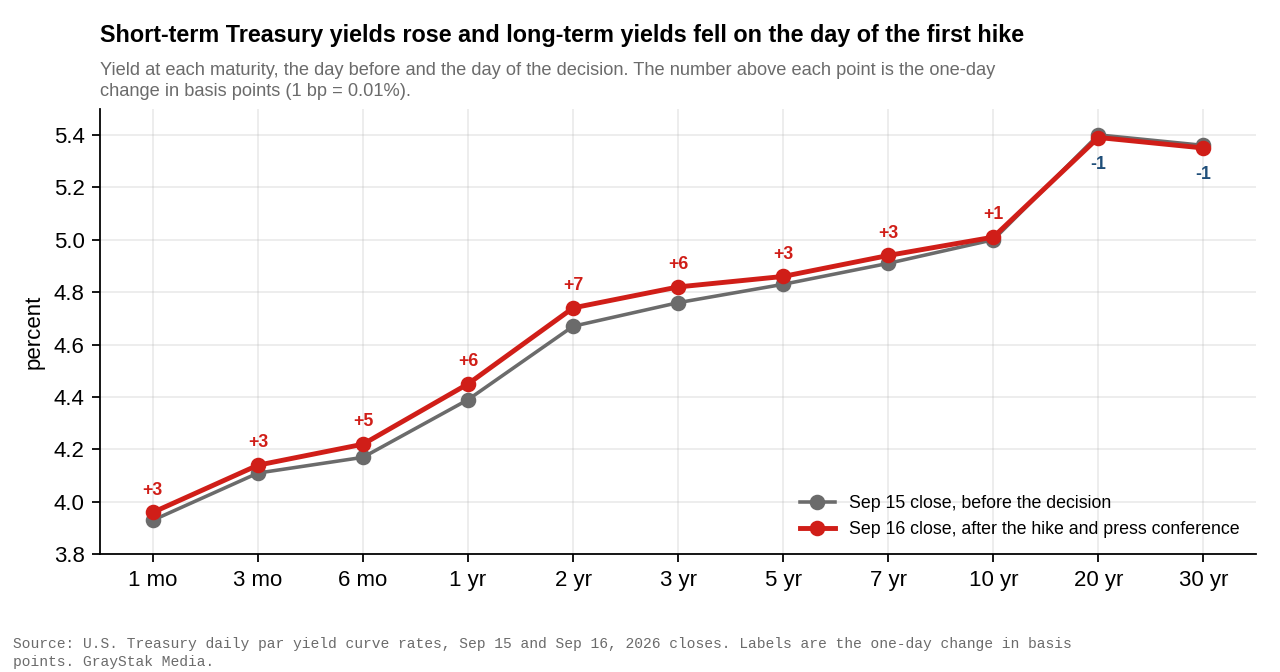
Figure 4. Treasury par yield curve, September 15 and September 16 closes, with the one-day change in basis points. Source: U.S. Treasury.
The market believed the decision, and then it priced the chair.
What it does to the four claims
Five Percent states and sources each of these claims. What follows is only what Wednesday added.
Growth carries the debt. The committee’s median for 2026 growth is 2.3 percent, revised up from 2.2. Bessent’s condition, stated September 8, is 3. The gap did not close on Wednesday. The Fed published a number, and it is seven-tenths short. What the day did give him is the composition: retail sales at 1.2 percent, the statement’s “resilient” spending and “robust” capital investment, a strong labor market. The private economy is doing what he said it would. The growth rate is not. And the hike itself is the Fed’s answer to his September 8 claim that rates were tracking energy and the link would break: the committee raised rates with Brent above $100 and named inflation, not oil, as the reason.
Rates should come down. Closed, by the institution the administration appointed. The president, the vice president, the Treasury secretary, the NEC director and the CEA chair asked for a cut or a hold over three weeks. The president’s chair delivered a unanimous hike and projected one more before December, with no cuts in 2027. The request and the answer sit a day apart. The president’s response, quoted below, conceded nothing.
It’s all about supply. The energy secretary made a new promise on Tuesday. Chris Wright told CNBC:
The pipeline outage is “a brief and temporary interruption” that “will be measured in days.” Chris Wright, CNBC, September 15
Independent analysts, citing satellite images of the damaged pumping station, said it would take weeks. Brent fell about 3 percent on his words, to $105.48 by 2:02 p.m. Eastern, with WTI at $102.26, after rising more than 16 percent this month. Saudi Arabia has begun moving crude through Hormuz with U.S. military assistance. The EIA’s weekly report showed U.S. crude inventories down 640,000 barrels to 423.4 million in the week to September 11, a smaller draw than expected. Warsh said at the press conference that the decision does not affect safe passage in the strait, which he called the primary pressure point keeping oil above $100. Wright’s “days” is now the counterclaim on registry entry FC-26-003, which resolves October 16.
Right after the midterms. The promise is untested, and its dates have not moved. Sixteen of eighteen participants expect at least one more hike this year, and the two remaining meetings are October 28, six days before the vote, and December 9. Futures put October at about even. A second hike on October 28 would be the Fed acting inside the window the promise asked voters to wait through, and it would support the argument that the Fed decided the election would be available to whoever loses it. Analysts quoted in The Hill had already previewed that argument before Wednesday’s vote.
What the White House said back
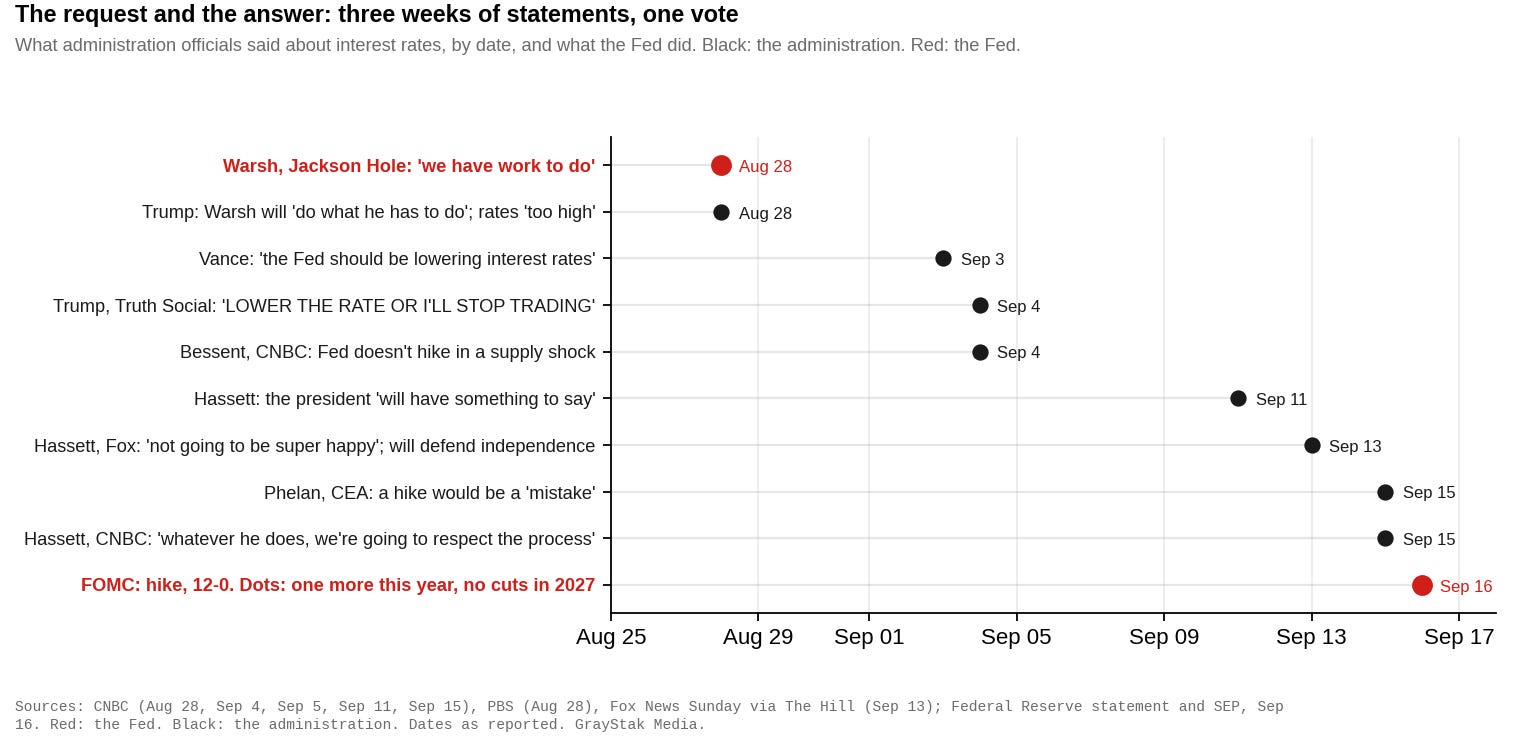
Figure 5. Three weeks of statements from the administration, and the Fed’s two answers. Sources as shown in the figure.
In the three weeks before the vote, the administration asked for a cut and, in the same statements, left itself room to accept a hike. Around September 2, the president said Warsh would “do what he has to do” on rates while calling rates “too high.” After the August jobs report, he called the committee “clowns” on Truth Social, told the Fed to “BE PATRIOTS for a change,” and said Warsh was trying to “do the right thing.” On September 4, Bessent told CNBC the Fed does not usually raise rates in a supply shock until second- or third-order inflation effects appear; the committee’s 3.7 percent PCE projection is its answer to that test. On September 11, Hassett said “there’s plenty of room for interest rates to go down” and that the president “voices that opinion while respecting the independence of the Fed.” On September 13 he told Fox News Sunday the president was “not going to be super happy about it, but he will defend the independence of Kevin Warsh above all.” On September 15, the CEA chair, Christopher Phelan, said a hike would be a “mistake,” and Hassett told CNBC:
“Whatever he does tomorrow, we’re going to respect the process and understand that he is doing what he and the committee think is correct.” Kevin Hassett, CNBC, September 15
The next afternoon, the president’s chair raised rates without a dissent and declined to discuss the president.
The answer came twice. On Truth Social, hours after the vote:
“Interest Rates in the United States should be 1%, or less, because we are the Best Credit in the World — BY FAR. Our Country is BOOMING with new Investment! If we stopped Trading with every country that we have a Deficit with, which is most of them, we would make, at least, 1.5 Trillion Dollars a year. ... LOWER THE INTEREST RATES FOR THE UNITED STATES OF AMERICA, AND FAST!” The president, Truth Social, September 16
And on the tarmac in Charlotte that evening, on his way to a Senate campaign rally:
“I talked to Kevin and I said, ‘you might as well vote with the board because it’s not going to matter.’” The president to reporters, September 16
He added that he retained confidence in Warsh. Kush Desai, the senior deputy press secretary, called the decision on Fox News “rather unfortunate” and “not backed by a particularly compelling economic case.” Reuters called the post the closest the president has come to a direct broadside at the chair he chose. So the president spoke to Warsh before the vote, which Warsh declined to confirm; told him the vote would not matter; and now wants a policy rate 1 percent or less, 275 basis points below where his chair set it. Bessent and Hassett had not commented as of Thursday morning.
The request and the answer sit a day apart.
The calendar, from the strikes to the deadlines
The war began with the strikes of February 28 and the closure of Hormuz on March 2, and the central banks stated the inflationary consequences within three weeks. The diplomatic track produced a ceasefire, a memorandum, and a collapse between April and July. The Fed held in July, and the long end sold off. The sanctions campaign, the continuing resolution, the buyback expansion, the ECB’s hike, the pipeline strike and the VTB designation all fell inside the three weeks before the ten-year closed at 5 percent and the Fed raised rates. What is scheduled from here is denser than what came before: twelve dated events inside eighty-six days, six of which resolve registry entries. The Bank of Japan decides tomorrow. The next Fed meeting is six days before the election. The refunding is the day after it. The continuing resolution expires thirty-eight days after that.
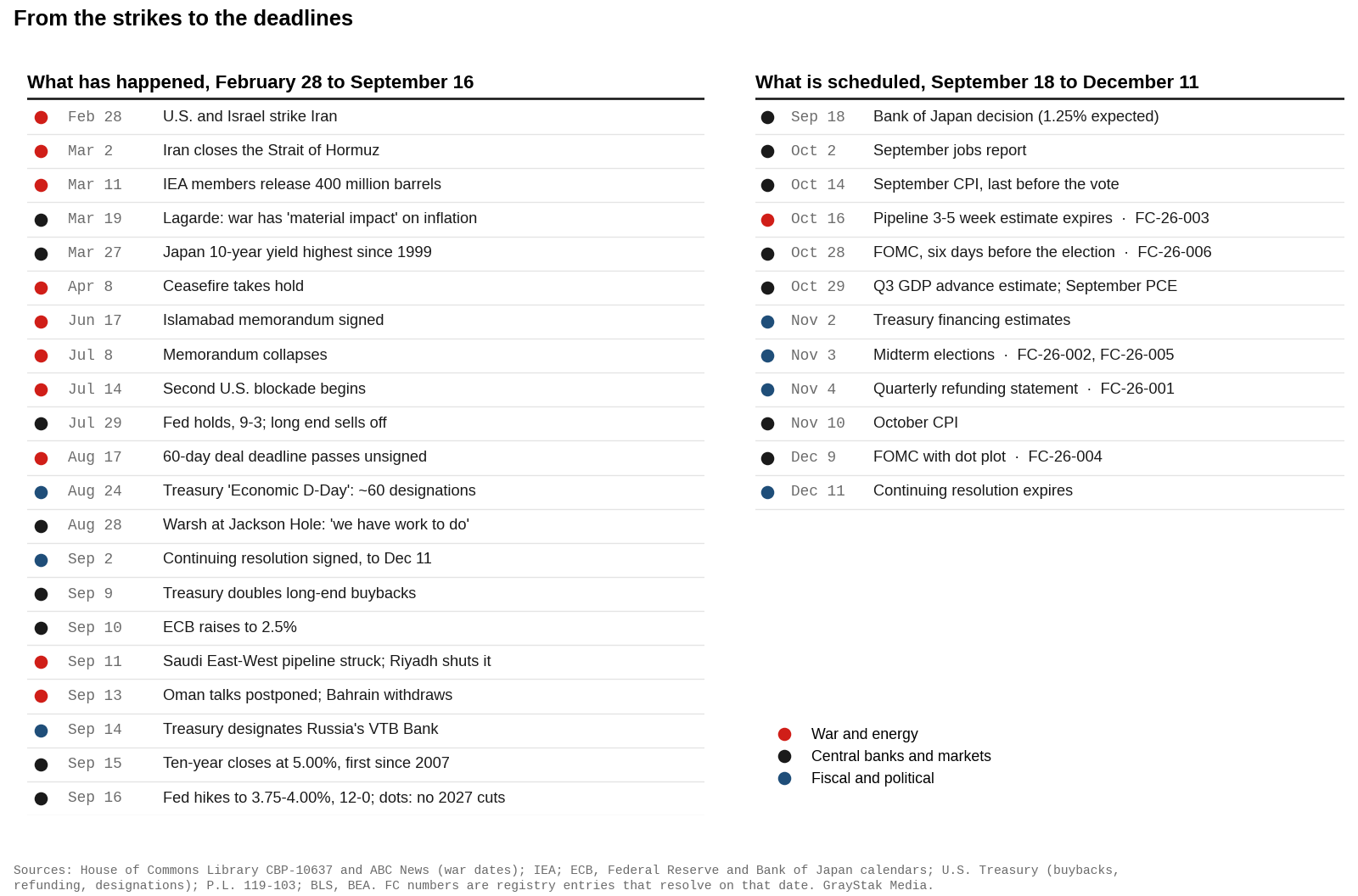
Figure 6. What has happened since February 28 and what is scheduled through December 11, with the registry entries that resolve on each date. Sources as shown on the figure.
Effects
The Effects section of Five Percent stands; Wednesday moved four of its lines.
Households. The two-year rose 7 basis points, and the thirty-year fell 1. Mortgage rates key off the ten-year, which closed 1 basis point higher, so the 6.76 percent mortgage in Freddie Mac’s September 10 survey is roughly unchanged. Locked-rate data from HousingWire put the 30-year conforming rate at 7.28 percent on Tuesday, up 22 basis points from two weeks earlier, so the survey average is lagging what borrowers are being quoted. Freddie Mac’s September 17 survey posts at 11 a.m. Central. Confidence: documented.
Corporate borrowers. Today’s quarter point is one of the 25-basis-point increments that Fitch estimates at about $3.5 billion a year in added interest across the leveraged-loan market. The dots say another is coming. For the $416 billion of speculative-grade debt due in 2027, half of it floating, the refinancing curve moved up. Confidence: documented on the increment; inferred on the timing.
Treasury. The November 4 refunding now prices against a Fed path with no 2027 cuts. The thirty-year fell on Wednesday, which lowers the cost of the bonds Treasury sells at the refunding, and the two-year rose, which raises the cost of the bills it sells every week. FC-26-001 is unchanged. Confidence: documented.
Appropriators. December 11 opens on a 4 percent funds rate and a dot plot that expects it to stay there through the year after. Confidence: documented.
Registry
The five entries logged from Five Percent stand. FC-26-004, the curve entry, has its first official observation: on September 16 the two-year rose 7 basis points and the thirty-year fell 1, which is what the entry says should happen. Thursday morning’s prints ran slightly the other way and will be logged at the close. Status: open, resolves December 9. FC-26-001, 002, 003 and 005 are unchanged by Wednesday’s events. One new entry is logged below, FC-26-006, on the October 28 decision.
What would show this wrong
Three things would weaken this reading. If by Friday’s close the two-year has given back Wednesday’s 7 basis points and the thirty-year has risen, the flattening was a one-day effect and the credibility reading was overstated. If futures price October 28 below 40 percent after the Bank of Japan’s Friday decision, the market does not believe the projections. If Brent settles below $100 by Friday, the energy leg eases regardless of the Fed and Wright’s “days” gains ground on FC-26-003. All three resolve at Friday’s close.
Method note
Sources, with dates of access. PBS NewsHour (president’s remarks on Warsh, around September 2); CNBC (Bessent, September 4; Hassett, September 11 and 15; Phelan, September 15; Vance and the president’s Truth Social posts as reported September 5); Fox News Sunday via The Hill (Hassett, September 13); AP (Swonk, September 16); federalreserve.gov FOMC statement and Summary of Economic Projections, accessed September 16; press conference remarks as reported by CNBC, Yahoo Finance, CoinDesk and CNN on September 16, to be reconciled against the Fed’s transcript; U.S. Treasury daily par yield table, September 16 row, read from the table on September 16; Census Bureau retail sales as reported; CNBC for the equity closes and Thursday morning yields; Saxo and FXStreet for the dollar index and settlements; HousingWire (September 15) for locked mortgage rates; Bloomberg (September 17) for the global bond reaction; CNBC survey for Bank of Japan expectations; Reuters, CNBC and Yahoo Finance for the president’s statements; Fox News for Desai.
Excluded. Press-conference quotations are as delivered and reported; they will be reconciled against the Fed’s transcript when it posts. The Bank of Japan’s Friday decision is not in this piece. Intraday prints are identified as such; closes are Treasury’s.
Transformations. Basis-point changes are close-to-close from Treasury’s table. Dot counts are read from the SEP’s accessible Figure 2.
Removed during verification. A claim that Warsh “did not submit a dot,” stated as fact; softened to CoinDesk’s reading. “Six hours after” publication, corrected to three. “Four officials” of the administration, corrected to five. A sentence stating the dots made an October hike “more likely than not,” which they do not; the dots say one more hike this year and the market puts October at even.
Requests for comment. None sent.
Archive entries
FC-26-006. The FOMC raises the target range again at the October 28 meeting. Confidence: contested; sixteen of eighteen participants project at least one more hike by year-end and futures price October near even. Resolves October 28, 2026.
Disclosure
Christopher Sweat covers Chicago and Illinois government from the public record, reporting local social and political dynamics for a national and international audience. He also reports on national security policy, intelligence oversight, public finance, and the defense technology sector. He is an analyst working across finance, technology, and politics, and CEO and Co-Founder of GrayStak.
GrayStak Media is an independent press operation covering institutional politics, elections, immigration enforcement, and investigative work where politics meets the economy, centered in Washington, D.C., New York, and Chicago.
GrayStak holds no position on anything discussed here. This piece is not investment advice.